One Pot Comfort
Elegant Frenched Chicken Leg with Creamy Domino Dauphinoise
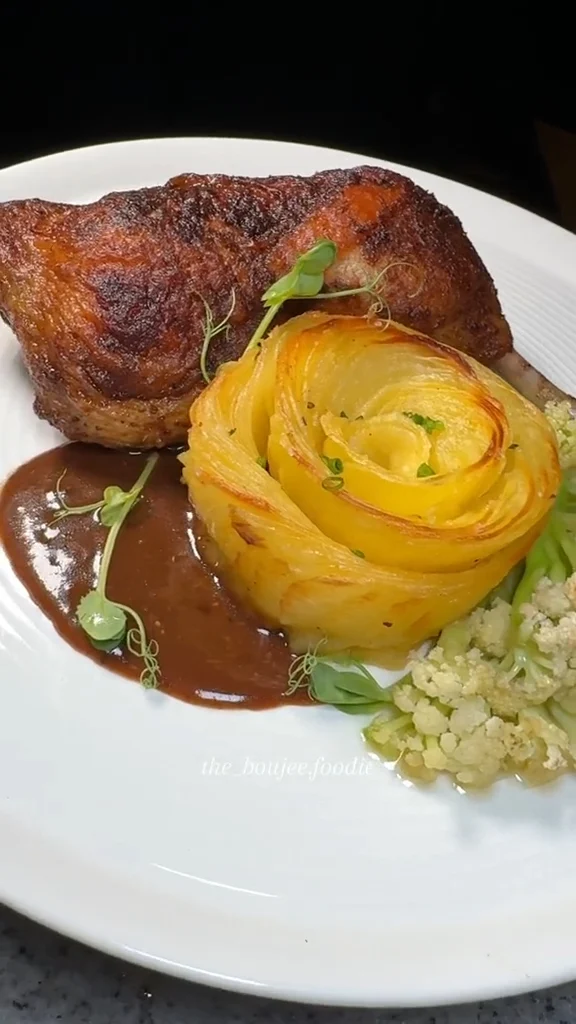
A frenched chicken leg is simply a drumstick with the meat and skin scraped back from the bone end, and it transforms a humble cut into something that looks like it came from a bistro kitchen. Here the exposed bone roasts to a crisp, savory tip while the skin turns deeply golden and crackling over juicy dark meat.
Beneath it sits a domino dauphinoise: thinly sliced potatoes arranged in overlapping shingles and bathed in garlicky cream and Gruyere. The chicken drippings fall straight into the potatoes as they bake, so the layers soak up schmaltz and cream at once and come out bubbling at the edges with a burnished top.
The whole thing bakes in one pan in under an hour, needs no sauce, and plates beautifully straight from the oven. It is the kind of dish that reads as dinner-party food but is really just a chicken leg and a pile of potatoes doing their best work.
Why You'll Love This Recipe
About the Ingredients
6 whole chicken legs (drumstick and thigh attached), about 3 lb (1.4 kg) total
Ask your butcher to french the legs for you, or do it yourself by cutting the skin and meat away from the bone end and scraping it clean. If whole legs are unavailable, two bone-in thighs plus one drumstick per person works well.
2 1/4 lb (1 kg) Yukon Gold potatoes, peeled and sliced 1/8 inch (3 mm) thick
A mandoline gives the most even slices, which is what makes the domino effect work. Russets will also work but release more starch, so rinse the slices well and pat dry.
1 1/4 cups (300 ml) heavy cream
For a lighter version, swap half the cream for whole milk; do not use skim milk or the custard will split. Half-and-half is a good middle ground.
1/2 cup (120 ml) whole milk
Whole milk adds body without making the gratin heavy. Oat milk can stand in if you need it dairy-free, but expect a slightly less rich set.
3 garlic cloves, finely grated
Fresh garlic is essential here; jarred garlic tastes metallic when baked. A microplane turns the cloves into a paste that disperses evenly through the cream.
1 1/2 cups (150 g) Gruyere, coarsely grated
Comte is the closest upgrade, and Emmental is the easiest supermarket substitute. Buy a block and grate it yourself, since pre-shredded cheese is coated with starch and melts less smoothly.
2 tbsp unsalted butter, softened, for the pan
Butter keeps the bottom layer from sticking and adds flavor. Use a pastry brush to coat the corners of the dish, where potatoes love to catch.
2 tbsp olive oil
Olive oil helps the chicken skin crisp before the fat renders. Any neutral high-heat oil works, but avoid butter alone on the skin since it burns at 425 F.
1 tbsp fresh thyme leaves, plus 4 sprigs for the pan
Dried thyme can replace the leaves using 1 teaspoon, but add it to the cream rather than sprinkling on top. Tarragon makes a lovely anise-scented alternative.
1 1/2 tsp kosher salt, plus more for the chicken
Kosher salt is easier to pinch and season evenly than fine table salt. If using table salt, reduce the amount by about a third.
3/4 tsp freshly ground black pepper
Fresh-cracked pepper blooms in the oven; pre-ground loses its punch. White pepper is a fine swap if you want a smoother-looking cream.
1/4 tsp freshly grated nutmeg
A tiny amount rounds out the cream without announcing itself. Grate it fresh over the cream, as ground nutmeg goes flat quickly.
Tips & Tricks
Dry the skin thoroughly
Pat the chicken legs completely dry with paper towels and leave them uncovered in the fridge for 30 minutes before roasting, since surface moisture is the number one enemy of crisp skin.
Slice potatoes evenly
Uneven slices cook at different rates and leave raw crunch in the middle, so use a mandoline or a sharp knife and a ruler if you must.
Do not skip the cream rest
Let the assembled potatoes sit for 10 minutes before baking so the starch releases and the custard sets into silky layers instead of a watery pool.
Check the internal temperature
Pull the pan when the thickest part of the thigh reads 175 F (79 C); dark meat is juiciest past 165 F, and carryover heat finishes the job.
Pro Tips
Step-by-Step Instructions
1. Heat the oven
Preheat the oven to 425 F (220 C) with a rack in the middle position. A fully heated oven is what sets the cream and crisps the skin in the same window of time.
2. French the legs
If your legs are not already frenched, cut the skin and meat around the narrow end of the drumstick about 1 inch from the tip, then push the meat down toward the thigh and scrape the bone clean with a small knife. Pat the legs very dry and season all over with kosher salt and pepper.
3. Warm the cream
In a small saucepan over medium heat, combine the cream, milk, grated garlic, nutmeg, 1 teaspoon of the salt, and the thyme leaves. Warm for 3 to 4 minutes until steaming but not boiling, then take it off the heat so the garlic infuses.
4. Butter and layer
Brush a 9 by 13 inch baking dish generously with the softened butter. Arrange the potato slices in tight overlapping shingles, standing them slightly on edge like dominoes, until the dish is full and even.
5. Pour and cheese
Pour the warm cream mixture evenly over the potatoes, pressing them down gently so the liquid seeps between the layers. Scatter the grated Gruyere over the top and tuck the thyme sprigs into the corners.
6. Sear the chicken
Heat the olive oil in a large skillet over medium-high heat until it shimmers, about 2 minutes. Sear the chicken legs skin side down for 4 to 5 minutes until the skin is deep golden brown and releases easily, then remove them without flipping.
7. Roast together
Nestle the chicken legs skin side up on top of the potatoes. Roast for 30 to 35 minutes, until the skin is crisp and lacquered, the cream is bubbling at the edges, and the thickest part of the thigh registers 175 F (79 C) on an instant-read thermometer.
8. Broil and rest
Optional but recommended: broil at 500 F (260 C) for 2 minutes to blister the cheese and sharpen the skin. Let the pan rest for 10 minutes so the dauphinoise sets, then serve each leg with a generous scoop of potatoes.
Delicious Variations
Mushroom and Thyme Version
Saute 8 oz (225 g) sliced cremini mushrooms in butter until browned and layer them between the potatoes for an earthy, meaty depth.
Dijon-Honey Glaze
Whisk 1 tbsp Dijon mustard with 1 tbsp honey and brush it over the legs during the last 10 minutes of roasting for a sticky, tangy crust.
Lighter Provencal Style
Swap the cream for 1 cup (240 ml) whole milk plus 1/2 cup (120 ml) chicken broth, and add 1/4 cup (25 g) grated Parmesan with a handful of halved cherry tomatoes on top.
How to Store Elegant Frenched Chicken Leg with Creamy Domino Dauphinoise
Refrigerator
Store leftovers in an airtight container for up to 3 days; keep the chicken separate from the potatoes if you want to re-crisp the skin.
Freezer
Freeze the dauphinoise alone for up to 2 months in a sealed container; the chicken freezes well too, but the skin will lose its crispness.
Reheating
Reheat the potatoes covered with foil at 350 F (175 C) for 15 to 20 minutes, and crisp the chicken skin side up on a sheet pan at 400 F (205 C) for 8 to 10 minutes.
Frequently Asked Questions
Q: What does frenched chicken mean?
Frenched means the meat and skin have been scraped away from the end of the bone so the bone is exposed and clean. It is purely a presentation technique, but it also gives you a crisp, savory bone tip to nibble on.
Q: Can I make this dauphinoise ahead of time?
Yes, you can assemble the potato layer up to 24 hours in advance and refrigerate it covered. Add the chicken just before roasting and tack on 5 to 8 extra minutes of oven time since the potatoes start cold.
Q: Why is my dauphinoise watery?
It is usually underbaking or slicing the potatoes too thick. Bake until the cream is fully absorbed and the edges bubble vigorously, and keep slices at 1/8 inch (3 mm) so they release starch and set into a custard.
Q: What can I use instead of Gruyere?
Comte, Emmental, or a sharp white cheddar all melt beautifully in this dish. Avoid mozzarella, which turns stringy and bland against the cream.
Q: Is it safe to cook raw chicken over potatoes?
Yes, as long as the chicken reaches 165 F (74 C) internally, which this recipe exceeds. The drippings that fall into the potatoes are fully cooked by the time the dish comes out of the oven.
If you make this Elegant Frenched Chicken Leg with Creamy Domino Dauphinoise, snap a photo of those golden shingled potatoes and tag me. It is the kind of dish that earns a permanent spot in your Sunday rotation, and I would love to hear how your family reacts.
Elegant Frenched Chicken Leg with Creamy Domino Dauphinoise
Elegant Frenched Chicken Leg with Creamy Domino Dauphinoise delivers crispy golden skin over silky layered potatoes in one impressive, oven-baked dish.
🧂 Ingredients
- 6 whole chicken legs (drumstick and thigh attached), about 3 lb (1.4 kg) total
- 2 1/4 lb (1 kg) Yukon Gold potatoes, peeled and sliced 1/8 inch (3 mm) thick
- 1 1/4 cups (300 ml) heavy cream
- 1/2 cup (120 ml) whole milk
- 3 garlic cloves, finely grated
- 1 1/2 cups (150 g) Gruyere, coarsely grated
- 2 tbsp unsalted butter, softened, for the pan
- 2 tbsp olive oil
- 1 tbsp fresh thyme leaves, plus 4 sprigs for the pan
- 1 1/2 tsp kosher salt, plus more for the chicken
- 3/4 tsp freshly ground black pepper
- 1/4 tsp freshly grated nutmeg
📋 Instructions
- 1Heat the oven — Preheat the oven to 425 F (220 C) with a rack in the middle position. A fully heated oven is what sets the cream and crisps the skin in the same window of time.
- 2French the legs — If your legs are not already frenched, cut the skin and meat around the narrow end of the drumstick about 1 inch from the tip, then push the meat down toward the thigh and scrape the bone clean with a small knife. Pat the legs very dry and season all over with kosher salt and pepper.
- 3Warm the cream — In a small saucepan over medium heat, combine the cream, milk, grated garlic, nutmeg, 1 teaspoon of the salt, and the thyme leaves. Warm for 3 to 4 minutes until steaming but not boiling, then take it off the heat so the garlic infuses.
- 4Butter and layer — Brush a 9 by 13 inch baking dish generously with the softened butter. Arrange the potato slices in tight overlapping shingles, standing them slightly on edge like dominoes, until the dish is full and even.
- 5Pour and cheese — Pour the warm cream mixture evenly over the potatoes, pressing them down gently so the liquid seeps between the layers. Scatter the grated Gruyere over the top and tuck the thyme sprigs into the corners.
- 6Sear the chicken — Heat the olive oil in a large skillet over medium-high heat until it shimmers, about 2 minutes. Sear the chicken legs skin side down for 4 to 5 minutes until the skin is deep golden brown and releases easily, then remove them without flipping.
- 7Roast together — Nestle the chicken legs skin side up on top of the potatoes. Roast for 30 to 35 minutes, until the skin is crisp and lacquered, the cream is bubbling at the edges, and the thickest part of the thigh registers 175 F (79 C) on an instant-read thermometer.
- 8Broil and rest — Optional but recommended: broil at 500 F (260 C) for 2 minutes to blister the cheese and sharpen the skin. Let the pan rest for 10 minutes so the dauphinoise sets, then serve each leg with a generous scoop of potatoes.